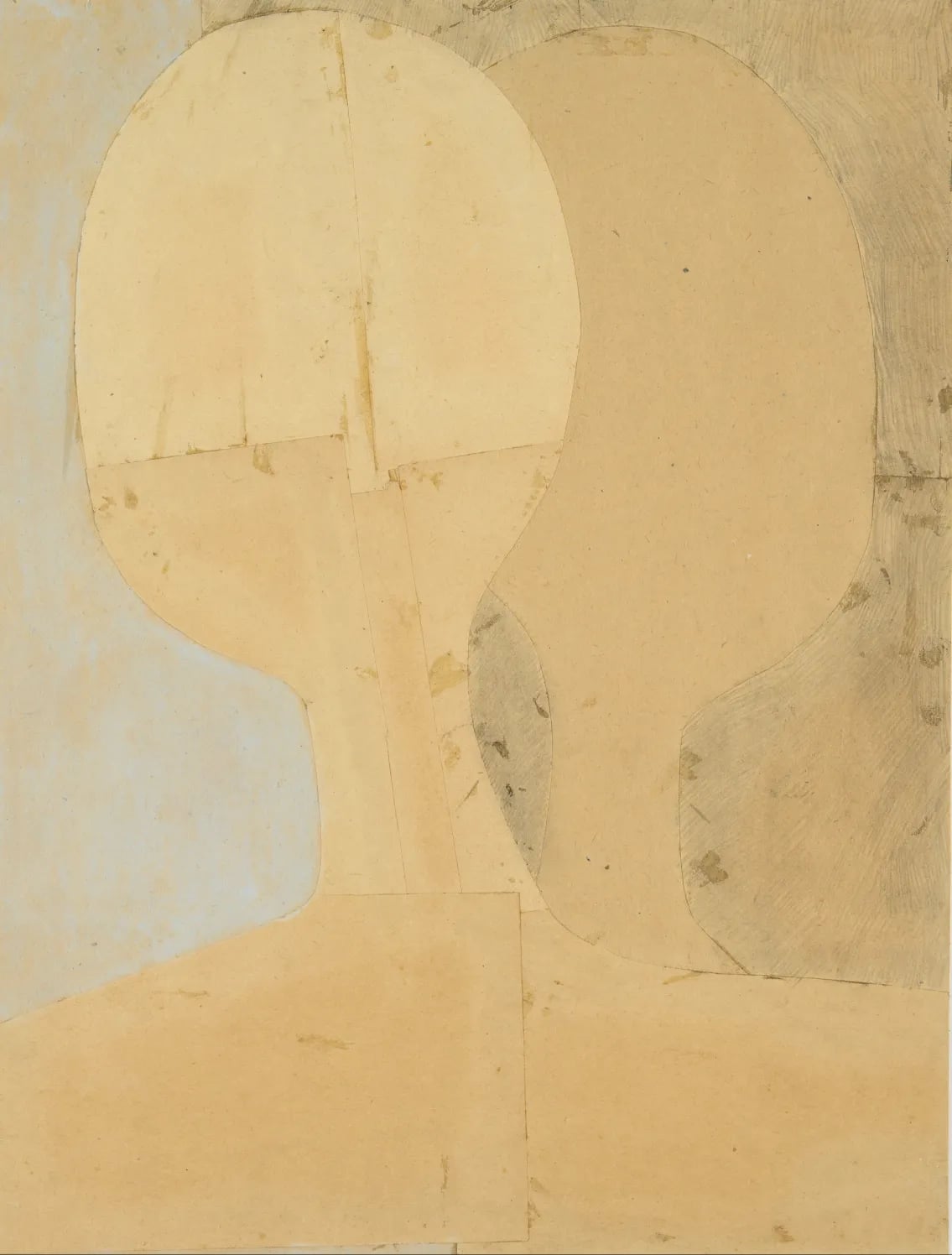
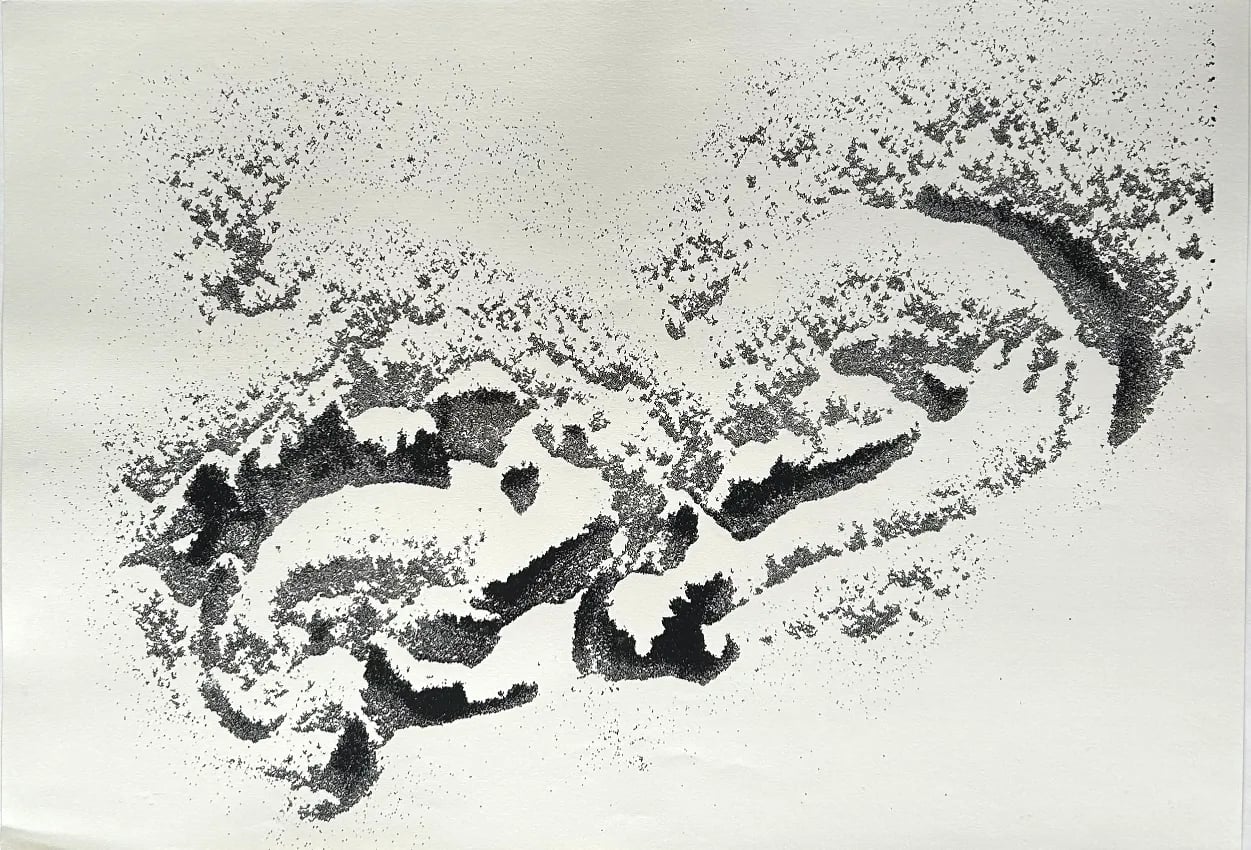
The work of two exceptional artists, life partners and companions, Pavel Brázda and Věra Nováková, reveals numerous similarities as well as strikingly contrasting tendencies. Alongside veristic painting, both artists also embraced pronounced stylisation and worked with structurally conceived paintings, often approaching the language of Informel. Their individual trajectories diverge in subject matter and in their engagement with Christianity, which each approached in a markedly different—indeed opposing—manner. Most notably, however, their differences emerge in their understanding of the relationship between the original artwork and its copy. While Věra Nováková remained committed to the unique artefact (often emphasised by her choice of subjects, such as portraits of figures close to her from the art world, as well as representatives of the Catholic faith), Pavel Brázda, inspired by his hominist ideas, leaned towards the democratisation of art. Art, in his view, should be accessible to all. For this reason, Brázda enthusiastically multiplied, reproduced, and replicated his works—first using xerography and later digital printing on canvas. As a result, some of his figures and heads exist in numerous variants, reappearing in different compositions and schemes. The first thematic line of the exhibition focuses on figures, heads, and portraits, highlighting the distinct artistic approaches of both authors.
Another important strand is represented by book illustrations. A key work for V. Nováková was the book What Can Be Said with Words, 1964 (Josef Hiršal, Bohumila Grögerová). It prompted her to reflect on the relationship between the meaning and the form of letters, and this slender volume gave rise to her letter-based paintings, some of whose motifs she also translated into objects and sculptures. Pavel Brázda not only collaborated on many illustrations, but above all endowed his works with nonsensical titles and commentaries, or even interpreted them himself in writing (often under the pseudonym Přemysl Arátor). This relationship to words and text forms the second thematic focus of the exhibition, and selected texts by Brázda—his interpretations of both his own works and Věra’s—are available in the form of an audio guide (QR code).
Within their illustration work, the Brázda couple also devoted themselves to floral illustration. However, the motif of flowers, plants, and vegetation appears across many independent drawings, watercolours, and even in landscapes with an almost idyllic character. The theme of vegetation also became central to a group of paintings by Věra Nováková in which she explores the letter “V”. It is likewise connected to the painting Adam and Eve, including its sculptural variant. For Věra Nováková, the motif of vegetation is characteristic, while in Pavel Brázda’s work it appears primarily in his early period. The third thematic section of the exhibition thus focuses on vegetation.
The exhibition Paintings, Words, Irises focuses on these three thematic strands, which also interweave with one another. It also presents the books What Can Be Said with Words, Our Perennials with illustrations of botanical specimens, Taschenatlas der Aquarienfische featuring almost surreal depictions of fish, and, last but not least, the book My Dear Brothers by Helena Palivcová-Čapková. Both Pavel Brázda and Věra Nováková contributed to the illustrations of these publications. In this way, illustration introduces into the exhibition the theme of collaboration—not purely in an artistic sense, but rather within a more applied sphere connected to work, income, and the everyday livelihood of the Brázda family.
For organizational reasons, the exhibition has been shortened by three days and will therefore close on Sunday, 12 July. Thank you for your understanding.

Věra Nováková & Pavel Brázda | Paintings, Words, Irises
By Vendula Fremlová
Apr 18 – Jul 12, 2026