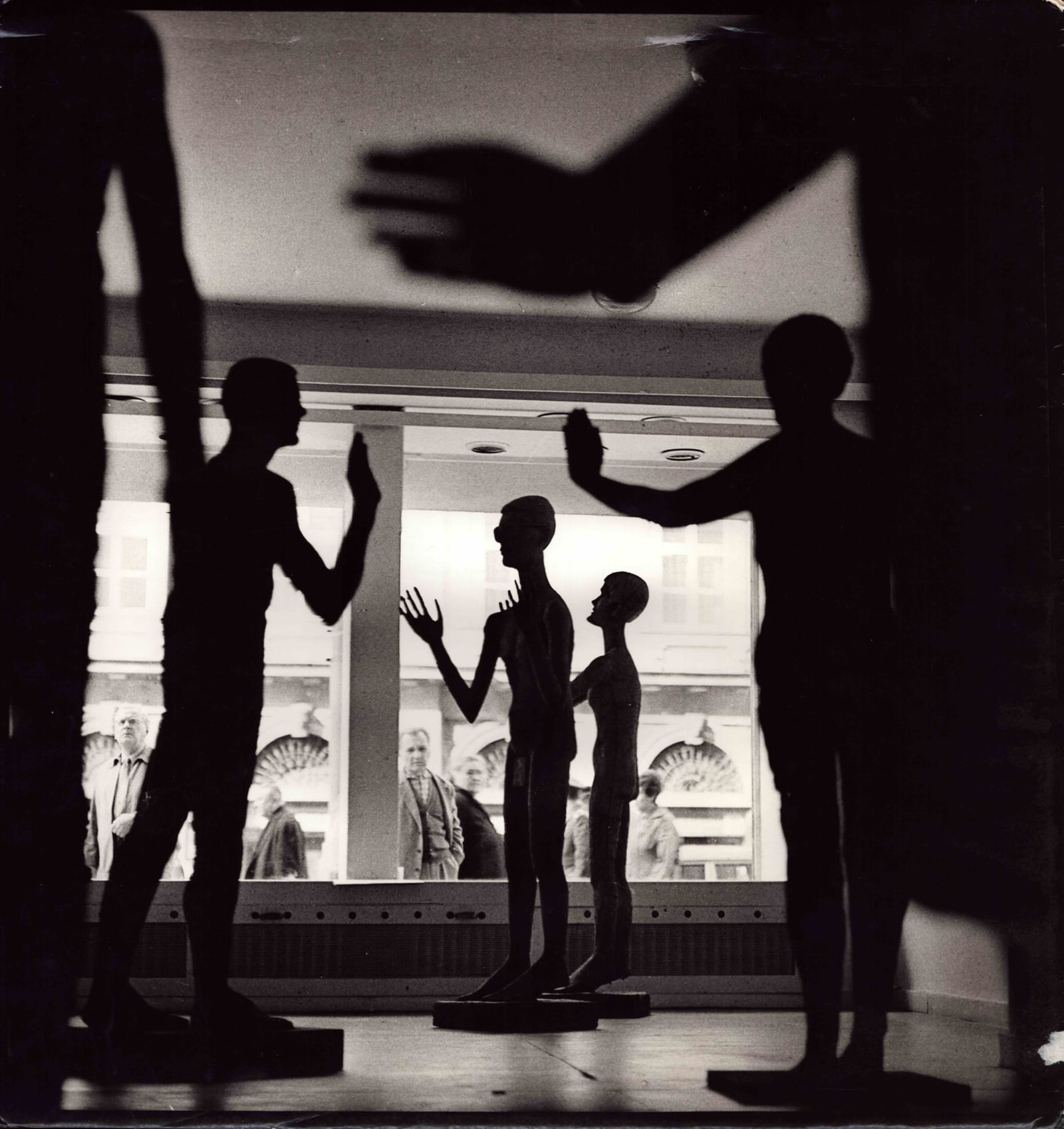
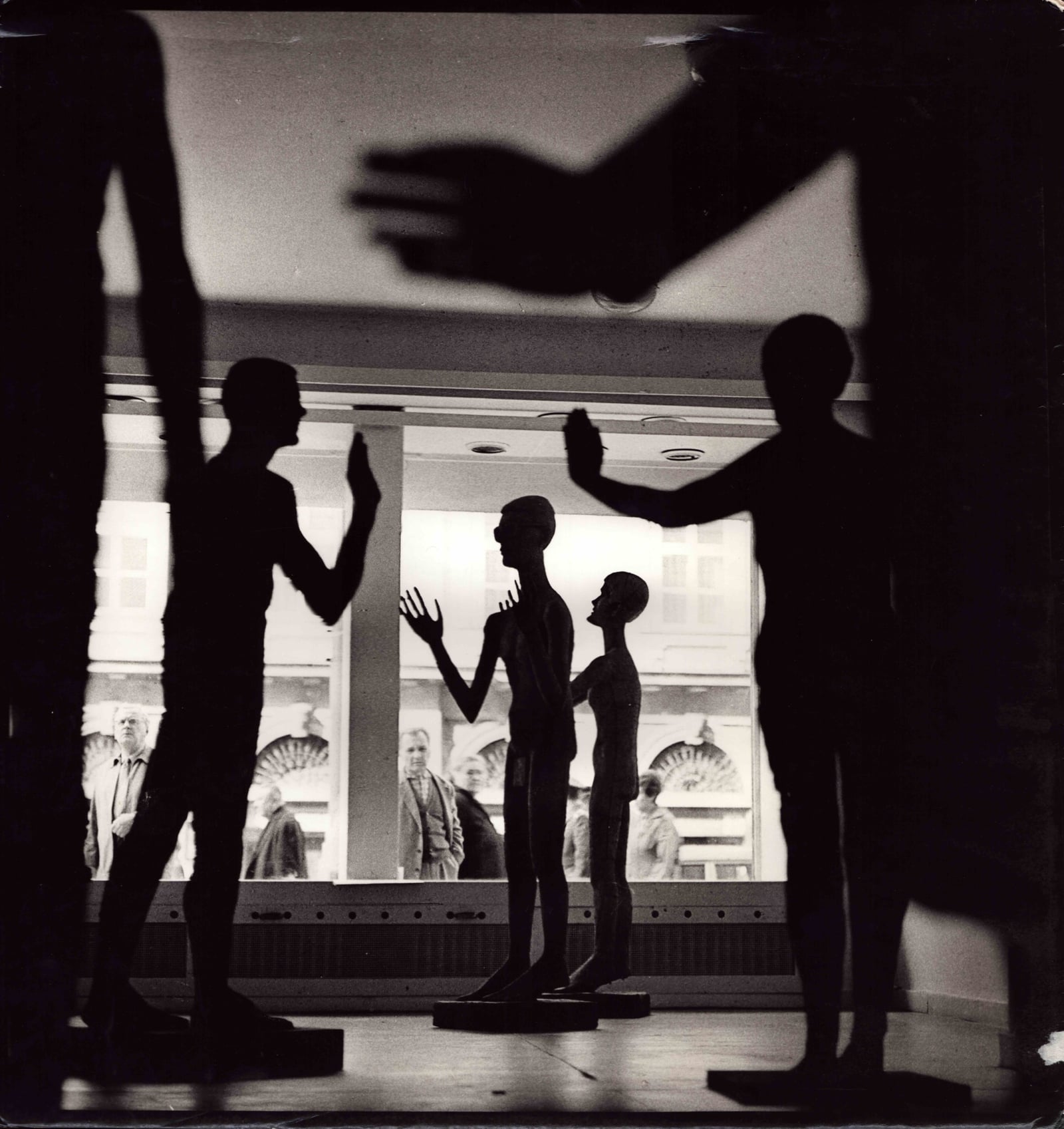
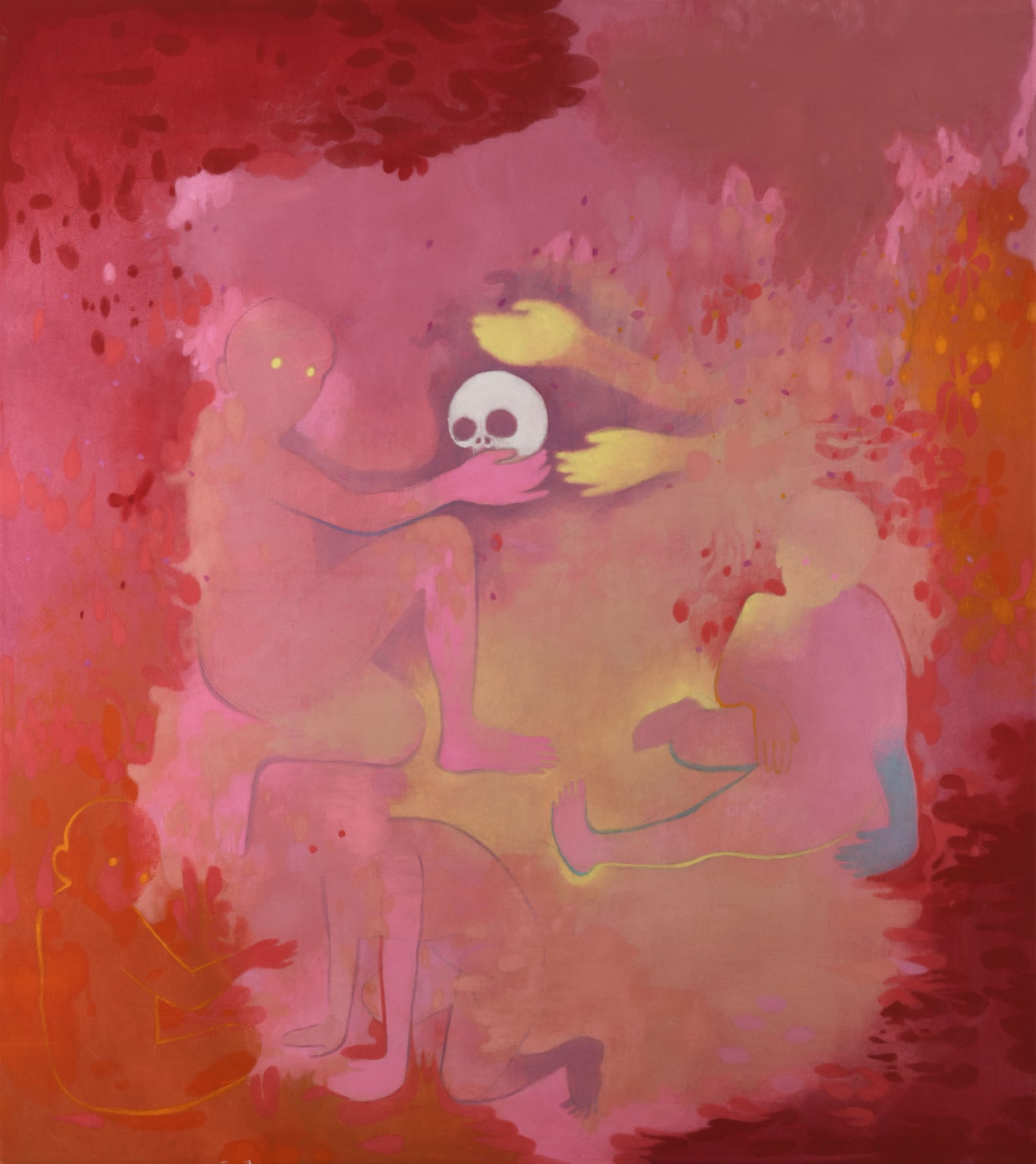
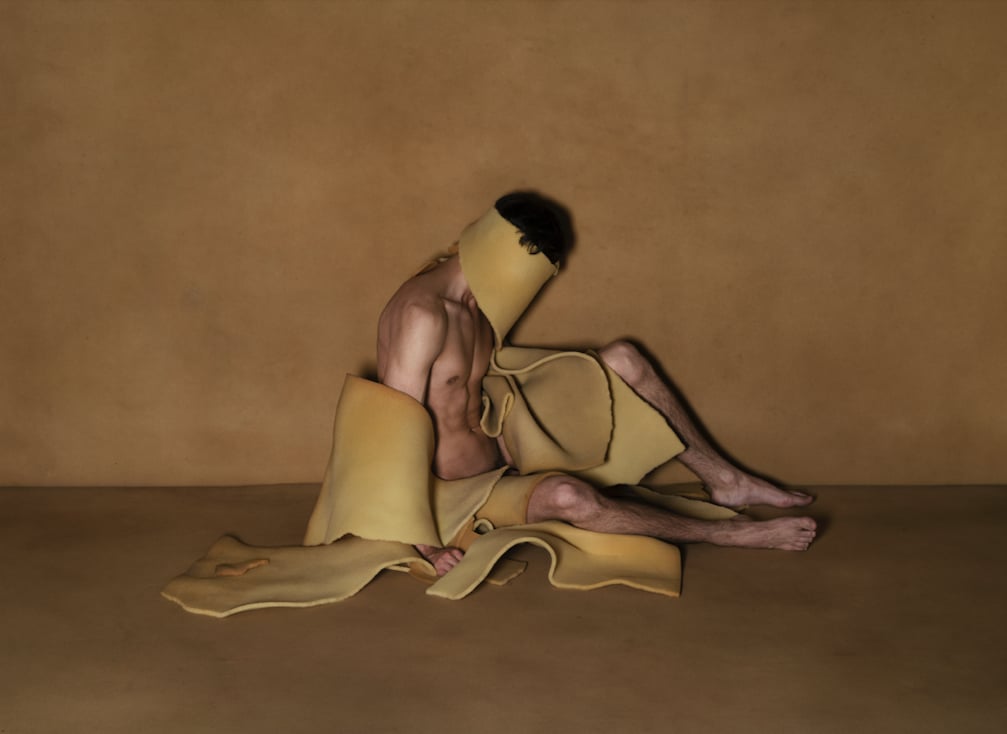
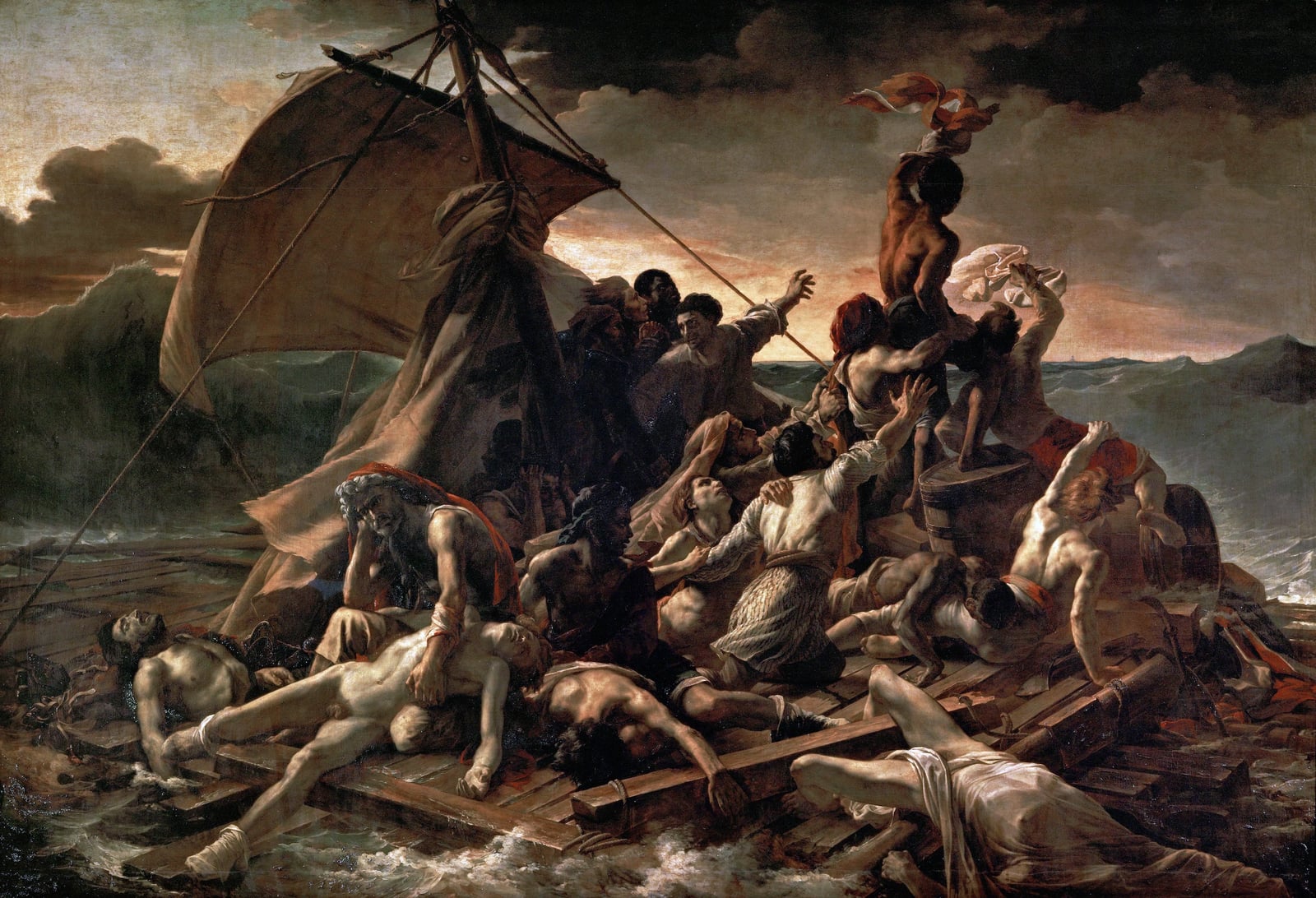
The Argus & Medusa exhibition is an improbably true story. Or rather, a fragment of it, a glimpse, an echo. It is the story of a two-hundred-year-old painting that is still considered one of the most powerful artworks in history. The monumental canvas titled The Raft of the Medusa (1818–1819), now hanging in the Louvre in Paris, has fascinated artists, writers, and other creators across time, cultures, and continents since its creation. This exhibition shows how the work stimulates the imagination of contemporary visual artists, reflecting the reality of today's world.
When, in July 1818, the young French artist Théodore Géricault shaved his head and locked himself in his Parisian studio, he was utterly obsessed with the idea of depicting a recent tragic event that had shaken French society and filled the headlines of the contemporary press: Following the shipwreck of the frigate Méduse off the coast of West Africa, 147 members of its crew found themselves with insufficient supplies on a makeshift raft, which was eventually abandoned by the lifeboats and the ship's captain, leaving it adrift on the open sea. Over the next thirteen days, the castaways on the raft became both victims and perpetrators of unspeakable horrors – violence, murders, and even cannibalism. Only fifteen of them were saved.
Géricault worked furiously for months, creating many sketches of the event. He finally decided to depict the moment when the survivors on the raft desperately wave at the rescue ship Argus, which is still just a tiny speck on the horizon. Argus and Medusa. A moment between hope and despair.
The Raft of the Medusa captivated the artists whose works are presented in this exhibition (as well as many others) with its monumentality, groundbreaking composition, and execution, but above all with its epic portrayal of humanity struck by sudden catastrophe. Artists understand Géricault's work as a metaphor for the contemporary world and its crises – from wars, pandemics, or the migration crisis to climate change, the breakdown of social order, and personal traumas. However, they also emphasize hope, human resilience, and the ability of the human species to survive, primarily through empathy, compassion, and solidarity. How do we manage crises and catastrophes when hope shrinks to a small dot on the horizon? The British playwright Tom Stoppard unequivocally summarized the message of The Raft of the Medusa: "If we don't stick together, we're sunk."
Exhibiting artists: Bill Viola, Nikita Kadan, David LaChapelle, Kader Attia, Elfie Semotan, Jakub Špaňhel, Miquel Barceló, Hu Jieming, John Beard, Wolfe von Lenkiewicz, Conrad Botes, Martin Gerboc, Sylvie Choisnel, Banksy, Tom de Freston, Jason deCaires Taylor, Adad Hannah, Joel-Peter Witkin, Karol Radziszewski, Paul McCarthy, Monika & Bohuš Kubinští, Pierre-Désiré Guillemet & Étienne-Antoine-Eugène Ronjat
Special thanks for the inclusion of literary work in the exhibition: Julian Barnes
Curator: Michaela Šilpochová

Argus & Medusa: On Hope in Hard Times
By Michaela Šilpochová
Opens in 31 days